
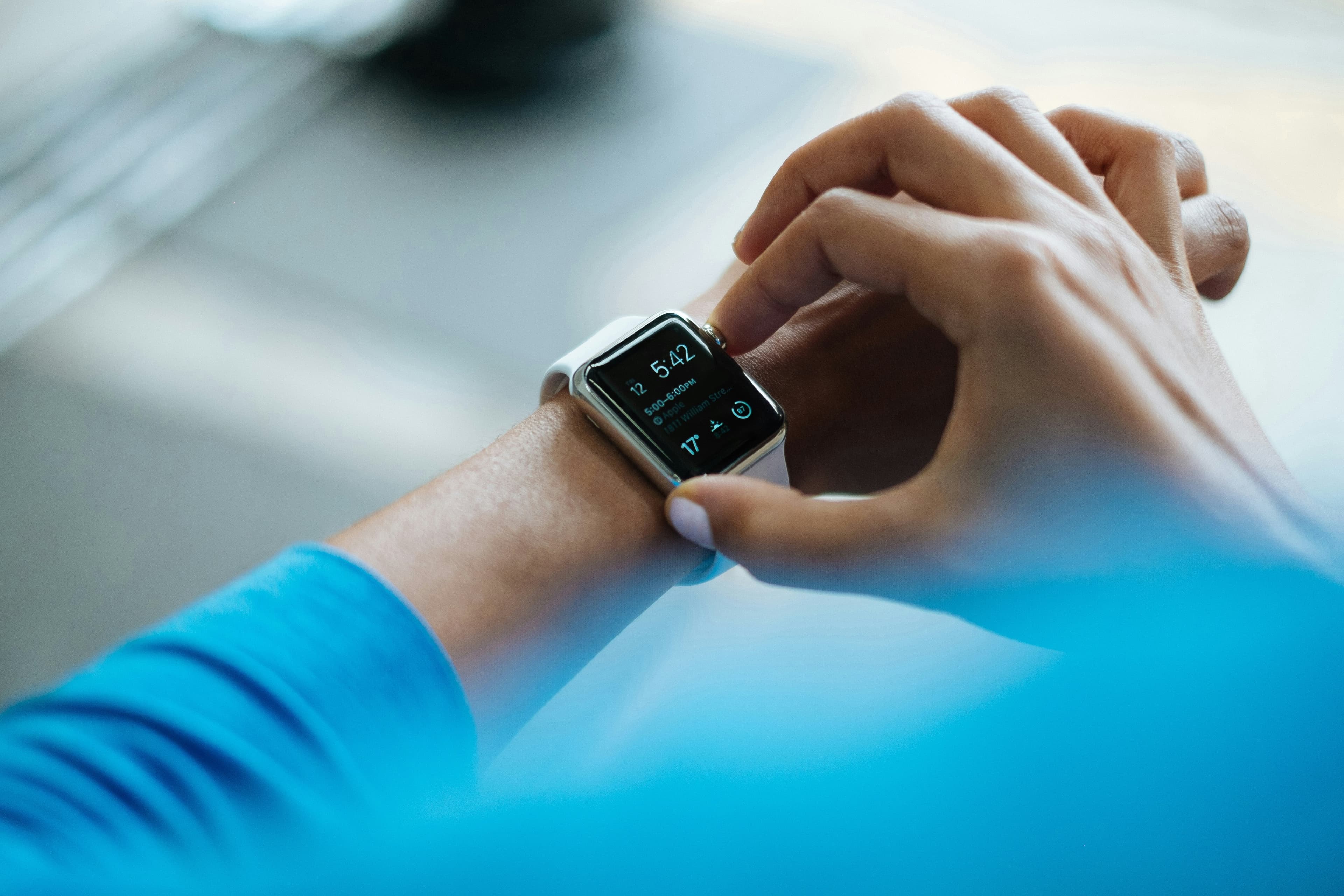
If you own a modern wearable or follow anyone in fitness, you have almost certainly encountered HRV. Heart rate variability shows up in recovery scores, sleep trackers, stress assessments, and training load tools. It has gone from an obscure cardiology metric to one of the most discussed numbers in consumer health technology.
But for most people, it remains a black box. A number that goes up or down, with a vague sense that higher is better, but little understanding of what it actually means or why it matters.
Let us fix that.
What HRV actually measures
Your heart does not beat like a metronome. Even at rest, the time between consecutive heartbeats varies slightly, sometimes 800 milliseconds, sometimes 820, sometimes 790. This variation is what we call heart rate variability.
These fluctuations are not random. They are controlled by your autonomic nervous system, specifically by the interplay between the sympathetic nervous system (your accelerator, activated by stress and exertion) and the parasympathetic nervous system (your brake, activated during rest and recovery).
When the parasympathetic system is dominant, when you are relaxed, recovered, and not under significant stress, the variation between heartbeats is higher. When the sympathetic system is dominant, when you are stressed, fatigued, fighting illness, or still recovering from hard training, the variation is lower and more rigid.
This is why HRV is useful: it gives you a window into the balance of your autonomic nervous system, which is itself a reflection of your overall physiological state.
How HRV is measured
Modern wearables estimate HRV using photoplethysmography (PPG), the same optical sensor that measures heart rate by detecting blood flow through your skin. This is less precise than a clinical ECG measurement, but accurate enough to track meaningful trends over time.
Most consumer devices measure HRV overnight during sleep, when the body is still and sympathetic activation is low. This produces a cleaner, more consistent signal than a daytime measurement taken during movement or after meals.
The specific metric most wearables use is called RMSSD (root mean square of successive differences), which captures short-term beat-to-beat variation and correlates well with parasympathetic activity. You do not need to memorize that. What matters is that different devices and apps may report HRV differently, which is one reason your absolute number matters less than your personal trend.
Why comparison is misleading
This is one of the most important things to understand about HRV: it is deeply individual.
Population averages for HRV vary enormously. Highly trained endurance athletes can have HRV readings in the 80 to 100 ms range. Sedentary individuals in their 50s might have readings in the 20 to 30 ms range. Neither is inherently good or bad. What matters is whether your HRV is trending in the right direction relative to your own baseline.
Comparing your HRV to a friend or a generic chart will tell you almost nothing useful. The meaningful question is: is my HRV higher or lower than my personal rolling average, and why?
What drives HRV up and down?
Understanding what influences HRV is where it becomes practically useful.
Things that suppress HRV
- Intense exercise, particularly in the 24 to 48 hours following a hard session.
- Poor or insufficient sleep.
- Alcohol, where even moderate amounts can reduce overnight HRV.
- Illness and infection, often before you feel overtly sick.
- Psychological stress and anxiety.
- Dehydration.
- Irregular sleep timing.
Things that support HRV
- Consistent, high-quality sleep.
- Aerobic fitness, where regular cardio is one of the strongest long-term predictors of higher HRV.
- Stress management practices including meditation and breathwork.
- Consistent sleep and wake times.
- Adequate hydration.
- Periods of planned lower training intensity.
You will notice that many things that suppress HRV are also things you would intuitively associate with not being at your best. HRV does not tell you anything you could never figure out from careful self-observation, but it surfaces the signal faster and more reliably.
HRV as a recovery tool
The most practical use of HRV for most people is as a daily readiness check. A morning HRV reading that is notably below your personal average, particularly if it has been trending down over several days, is a strong signal that your body has not fully recovered and may benefit from a lighter day or rest.
A reading at or above your average suggests your body is ready for higher demands.
The nuance is that HRV should rarely be used as the sole input. A single low morning does not necessarily mean you are overtrained. Context matters: did you sleep badly, drink last night, or travel across time zones? A trend of suppressed HRV over several days is more meaningful than a single outlier.
Think of HRV less as a verdict and more as one voice in a conversation your body is constantly having with you. The skill is learning to listen to all of them together.
How Vobbin uses HRV
Vobbin pulls HRV data from Apple Health alongside sleep data, resting heart rate, activity logs, and other signals to build your daily recovery and energy context. Rather than showing you a raw HRV number and leaving you to interpret it, Vobbin synthesizes it with the broader context of your recent recovery and training load.
The goal is to give you a single, honest readiness signal and, when AI chat is enabled, to help you understand what is driving it. Not just your HRV is low today, but what might be contributing and what that means for how you approach the day.
HRV is a remarkable tool. But it is most powerful when connected to everything else your body is telling you, not read in isolation.